

Articles

DNAFit – Achieve Your Genetic Potential
Anyone who has been in a training squad will have seen team-mates who improved greatly with training and others who didn't improve anywhere near as much. As an increasing amount of research is carried out into performance genetics, the reasons for these differences are becoming clearer. There are now a number of genes that can partially explain the response to different types of training.

The Benefits of Electronic Training Feedback
Qualitative and quantitative feedback are two ways in which a coach can assess an athlete in both a learning and performance environment. Qualitative feedback is purely sensory and is often subjective in character. A coach observes his or her athlete for movement deviations, listens for inconsistent stride/stroke rhythms, etc. It can also come in the form of how the athlete “feels” during a movement. The information generated from this type of observation is qualitative because it focuses on and describes a particular quality of the task or the athlete. Quantitative feedback, on the contrary, is a numerical form of measurement that extrapolates specific quantifiable data such as speed, time, pace, jump height, force, etc. Quantitative data is inarguably a very objective form of feedback for the athlete, making it a reliable method for performance comparisons.
Sprinting and the 10,000-Hour Rule
The deliberate practice model holds that sporting success is a function of time doing specific practice; the more specific practice you do, the better you will perform. This is commonly known as the “10,000 hour” rule, popularized by Malcolm Gladwell’s 2008 book “Outliers”.

The MLS and NFL Combine - Speed and Jump Testing Decoded
Every winter for one month, the combines for the National Football League and Major League Soccer draw a huge amount of attention in the media for what is simply a day of performance testing. Yet, after the combines players seem never to get tested again making me wonder if the numbers are so valuable shouldn’t teams test again to see if they are getting better, staying the same, or getting worse. This article will review two points that everyone should know: that testing is important, and you must be able to understand the relationships and limits of jumping and sprinting.

11 Mistakes I've Made (So You Don’t Have To)
Part of me being a coach is helping the next generation and passing on what I’ve learned. Here is your chance to learn from some of the things I did wrong.

Why Do We Turn Left on a Track?
I often tell my athletes that track running is a lot like NASCAR—run fast, turn left, repeat as necessary. But why do we turn left on a track? The question may well be related to why we turn left in a lot of activities.

Shin Splints: How Smart Coaches Avoid Them
Shin splints are the dreaded injury for any high school coach or athlete. Most commonly, cross country runners and track and field athletes develop this injury as a result of the high-impact nature of their sport. Potentially debilitating effects of the syndrome’s painful associated symptoms can hamper a progressive season. The need for rest becomes a priority; the periodization of training halts in place and must be completely reworked to accommodate the athlete’s rehabilitation process. Coaches should be able to recognize the key warning signs of this overuse injury, and reduce training loads accordingly before the athlete suffers the full effect of the syndrome. Development of a smart training progression from day one and early recognition of overreaching are crucial for the athlete’s health and long-term success throughout the season and his or her career.

Project Springbok: Break Conditioning Test Records and Make your Opponents Suffer
Two years ago Hakan Andersson sent me a research study on a Springbok, a deer in Africa that can run fast and run far. That made me think about the limits of the combination of speed and endurance for team sports. What I have done over the last few years is test cutting-edge programs no matter how demanding, and found out what works and what doesn’t work. Everyone wants to be fast in team sports, but the compromise of being deadly in the final minutes of regulation is the Holy Grail in sports.

Applying Science to Speed Training
This article highlights Ken Jakalski's evolution to the Weyand/Bundle Speed Regression Algorithm in his efforts to provide guess-free time and distance goals for individual bouts of high speed sprinting. The author analyzes how his journey began in the mid 70's when he first experimented with the evaluation indicators Russian coach Valentin Petrovski developed in training Valeri Borzov, the 1972 Olympic Champion in the 100 and 200 meter dash. While Petrovki's projections were based on the actual performances of Soviet and foreign sprinters and adjusted over time, the Bundle/Weyand algorithm is based on extensive research revealing how the performance duration curve in sprinting is due to force impairment. It can predict high speed running performances with 97% accuracy.

Developing a Context-Specific Acceleration Model
By Matt Gifford Great strength and speed coaches seek simplicity but understand the ambiguity of sport. To properly select the most appropriate exercises we need to understand the carry over that...

Reaction Time in Track & Field Athletes
In the world of track and field, reaction time is known to be a pivotal aspect of a top-level athlete’s technical arsenal, separating the gifted from the elite. Gender, age, mental state, and learning experience also play a role in the athlete’s ability to react to a given stimulus. The slower the stimulus recognition information is passed to the brain, the slower the reaction movement. In professional track and field sprint events, a delay of even one-hundredth of a second can cost the athlete a podium position.
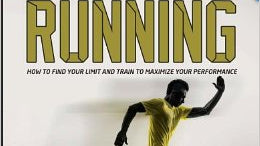
The Science of Running - 5 Hidden Secrets I Love
In the fantastic book The Science of Running, Steve Magness outlines a wonderful primer for endurance running, but it should just be seen as a manifesto on training in general. I have read the book six times already as every chapter is well written and practical. No one has found a way to take the science and make it applied in the endurance world more than Steve, and if I was on an island and had only a backpack of books this would be in it. What are the lessons? I picked five because of the Olympic rings, but one can get a hundred or more different nuggets of wisdom from his book.
