

Articles

Championship Competition Contingency Planning
Competing in high-level meets such as state championships has plenty of pressure. A number of possible variables can make things even more difficult. Contingency planning—what to do in the event that such variables actually happen—can ease athletes’ minds and help them to perform at their best.

Should We Ignore the Psycho-social Aspect of Competitive Athletics?
As we look at the bio-psycho-social approach to training high school athletes, “psycho” and “social” may be as equally important as “bio.” So-called “fluff” in programs is often part of a firm foundation along with the most advanced technical knowledge. Some may call it a placebo, but it’s hard to ignore the positive results it achieves.

The 2015 NFL Scouting Combine
Prospects begin the stressful process of preparing for the NFL Scouting Combine 6-8 weeks prior to the event. The stress levels increase even more from the moment they arrive in Indianapolis. They must deal with performing at their best while often being deprived of adequate sleep and nutrition. Their coaches can help them deal with these issues.

Why Every Coach (Yes You!) Should Write
A longtime contributor to this website discusses the reasons why his fellow coaches should share their insights. You’ll learn a lot, writing down your thoughts helps to crystallize your thinking, you’ll have the satisfaction of knowing that you’re contributing to the overall body of knowledge about your profession, and you may even become better known. So why not pick up a pen, er, keyboard, and join the conversation?

Too Many Notes
It’s better to do a few things well rather than doing a lot not so well. Focus on the essentials for your sport. And make sure that your athletes aren’t overwhelmed with work and that they get enough rest.

The Genetics of Sports Nutrition: Caffeine and Vitamin D
Responses to caffeine and Vitamin D vary widely among athletes. Several studies suggest that these variations are due to different genetic markers. As more specific research studies are conducted, it appears likely that athletes can more accurately learn how to develop optimum levels of these two supplements.

What It Takes to Succeed in NCAA Division 1 Female Middle Distance Running
Comparing elite female high school and college middle distance times yields interesting conclusions. All-Americans Geena Gall-Lara and Amanda Mergaert provide insights into dealing with the challenges that girls making the transition to the next level are likely to face. Both turned pro after graduating and continue to improve.

Resistance Run Training: Thoughts, Observations and Guidelines
Many coaches believe that relatively heavy weights are best for resistance training. But considerable experience demonstrates that lighter weights than are customarily accepted improve both acceleration and speed development while allowing athletes to maintain proper form. These weights are easy to calculate for individual athletes, thereby avoiding the “one size fits all” dilemma.

The 6 Top Conditioning Workouts for Speed and Power Athletes
Without proper conditioning, power and speed work can collapse like a house of cards. These six types of conditioning workouts range from pool sessions and cycling all the way through to the “nuclear meltdown.” You’re likely to find plenty of useful tips to help your athletes improve.

Analyzing 3 Key Concepts in Tony Holler’s Creation of a Sprint Culture
Illinois Hall of Fame coach Tony Holler lays down the law as he sees it in his quest to promote sprinting. Periodization is one of his targets. He says there are just two seasons: football and track.
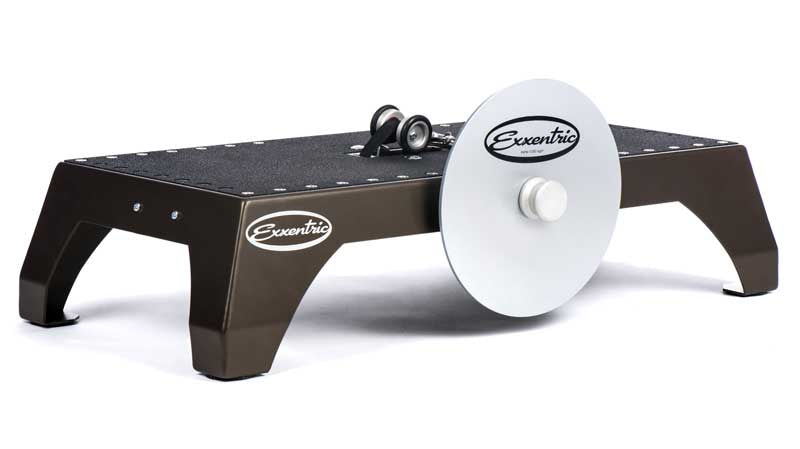
Exxentric kBox 3 Review
The new kBox 3 updates and improves upon flywheel training to offer eccentric/concentric work in a compact, lightweight form. The accompanying kMeter allows this work to be quantified. Accelerated hypertrophy gains and orthopedic safety are among its chief assets.

Deconstructing (and Reconstructing) the Depth Jump for Speed and Power Performance
Depth jumping may be the best single method of advancing overall power and jump height. It may also be the most incorrectly performed exercise. Coaches need to establish personal goals for their athletes based on a number of factors, and ensure that the jumps are performed properly.
