

Articles

Comparing the Biomechanical Demands of Different Running Surfaces
Most runners are creatures of habit by nature, running the same go-to routes, at the same pace, in the same shoes, at the same time of day. Running the trusty four-mile loop around town also means the surface never changes. The creatures of habit can tell you where every pothole, overgrown bush, dip in the road, and crack in the sidewalk lie, right down to the tenth of a mile. If this sounds familiar, then take this opportunity to learn how breaking new ground can be a beneficial tool in turning any runner into a biomechanically stronger one.

Gaining Muscle Performance Insight with Tensiomyography
The field of muscle diagnostics has a long history of providing valuable, objective information for use in risk management, injury diagnosis and muscle composition data. Ultrasound Imaging, MRI, and EMG have laid the foundation for the modern use of these diagnostic devices in sport performance. In the analytics era, data is more important than ever. Sports professionals are now searching for new and more valuable technologies for use diagnosing and monitoring athletes.

The Genetics of High Performance Exercise
It is often said that elite athletes are born and not made. This indicates that there is a large genetic component to sporting performance. Many studies have looked at the inheritability of athletic traits, and estimates for how much sporting ability is inherited ranges from 20% up to 70%, depending on the sporting skill required. It appears that for physiology-based sports, such as athletics, the genetic aspect is higher than in skill-based sports where different roles can be fulfilled by different people. For example, a sprinter will always need to be fast, while an elite soccer player can be quick, have good endurance or a mix of the two. Understanding the genetic component to sporting success can lead to better training programs, more efficient training and potentially increased success.

The 6 Top Plyometric Workouts for Athletes
Plyometrics can do more than just increase elastic energy utilization; they can also help with teaching skills and reducing injuries. I chose the routines because I have used them for years or used concepts from the workouts and found them to work at each level of athlete development.

How 12 Coaches Impacted My Career
Tony Holler to be inducted into the ITCCCA Hall of Fame, Class of 2015. Coach Holler reflects on the coaches who influenced his career.

5 Jump Tests that Transfer To Speed
Jump testing is commonly used to observe leg power. The goal for jump testing is to see how the training is affecting the jumping ability and see how training may influence running velocity at different parts of the acceleration curve. Speed predicts speed, and using jump tests to have confidence in what one is going to see on the clock is not the right thinking. A better option is to look at jump tests and see if the general power and elastic training is augmenting the scores, and how the scores might provide benefit to the running splits.

Proven Speed Training Tips For Crossfit
Crossfit involves workouts that are very intense, and they can be highly fatiguing, especially if they involve Olympic lifting. As such, within a typical Crossfit program, planning sprint training at an appropriate time point can be challenging. With sprint training, it is important to remember that it is a very central nervous system (CNS) intense activity. Sprinting at near to maximum capacity, whilst not always fatiguing in the energy system sense, will fatigue the CNS. Here are proven speed training tips that Crossfit athletes should include in their program.
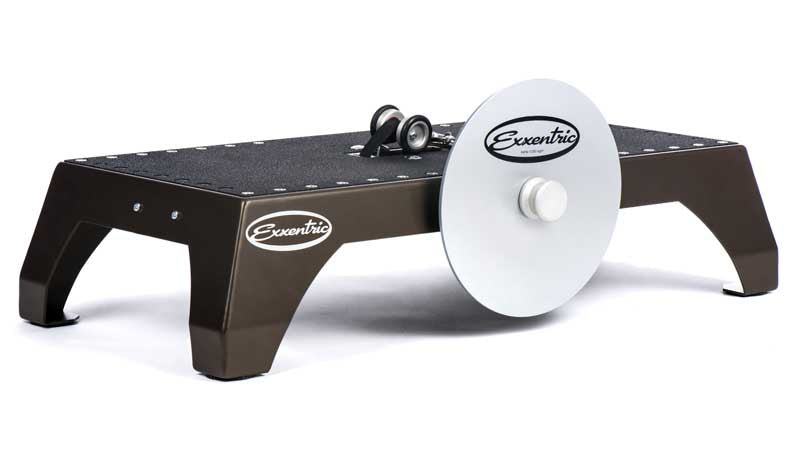
What Every Coach Ought to Know About Flywheel Training
Exxentric announces the kBox 3. We review the latest advancements in flywheel technology and the science behind the training.

The Ten Commandments of Warming-Up for Speed
The number one problem of sports is that coaches are afraid to do the basics over and again as it looks like they are not evolving. My solution is simple; instead of blaming everything and everyone for injuries or poor performance, follow a checklist of ten essential components to properly get ready for quality power work.

Building a Champion
I think part of the reason for my passion as a coach was my inability to find someone to help me on my path to my athletic goals in my younger years. Of the many things that I enjoy about what I do, this is really my favorite. I like to be the bridge to help an athlete accomplish their athletic goals. What is cool about the process is the ability to look back and see where they started and where they finished.

Should Distance Runners Do Speed Workouts?
There are plenty of factors that have been identified to contribute to improving running economy, both physiological and biomechanical. Not all of them can be improved by sprint training, but some of them certainly can. One of the key kinematic variables related to running economy is a low vertical oscillation of body center of mass. One way to prevent this vertical oscillation is to ensure that the support leg does not buckle on ground contact, and instead can maintain center of mass height throughout the stance phase.

8 Competition Day Nutrition Mistakes That Are Ruining Your Performance
Athletes can be notoriously fastidious regarding their nutrition around training. They can go to great lengths to ensure that they are consuming the right quantities of each macronutrient, micronutrients, fluid, and supplements. But all those excellent nutritional habits might be for nothing if nutritional practices on competition day are poor. In this article, I examine some common mistakes that athletes might be making regarding their nutrition on the day of their competition, and provide some practical tips to consider making.
