

Articles
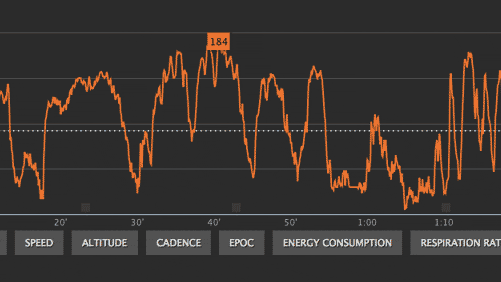
5 Mistakes Sprinters Make in Tempo Runs
Tempo runs are a staple in many programs for athletes. Unfortunately, most of them are poorly applied and not rooted in drug-free science, and they create overtraining syndromes. In this article, I will cover several training theories, dig into the sports science, and attempt to apply a pragmatic overview of what can potentially help athletes.

Biochemical Adaptations in Sport: Dr. Mehis Viru Interview
Mehis Viru is an associate professor at the Institute of Sport Pedagogy and Coaching Science at University of Tartu and personal coach for top Estonian hurdles and jumpers. Mehis is also well known as a coauthor to the state of the art textbook “Biochemical monitoring of sport training” that he wrote with his father professor Atko Viru, famous for his pioneer work on endocrine functions in muscular activity and adaptation mechanisms in training.

Fastest 40 Yard Dash
In the NFL, speed is a commodity that's always in serious demand. College players become stars on the backs of their fastest 40 yard dash times, and even NFL vets love to debate who's the fastest. If you're a football fan or running enthusiast, you've probably wondered which NFL players have the fastest recorded 40 yard dash time. Our list has you covered, from the fastest punters to the lightning-quick offensive players who light up your TV screen on Sunday afternoons. Check out the fastest 40 yard dash times by position, and the fastest times overall.

Performance Analysis - Velocities and Splits
In this article, we will look at the 100-meter dash splits and velocities as a model to understand how analysis drives training. The key race splits are available after the event, and it is one of the best ways to get an indication of how career development is going. It is essential for coaches wanting to know what happens and how an athlete’s talent develops over time. In this article, the concepts of race analysis and training interventions will be shown in a simple review, allowing coaches and athletes to comprehend how speed must be evaluated properly first, before one can draw conclusions and training changes.

Indiana Pacers Strength Coach Shawn Windle
Indiana Pacers Strength Coach Shawn Windle responds to questions about athlete motivation, nutrition, monitoring, sport science, and the future of team coaching.

Hamstrings, Activation, and Speed
I am proud to say that I am a life-long learner. I read and I read and I read. I observe successful educators and question their ideas. I also learn from the mistakes of others. However, it's hard to look back on my younger days without some remorse. “Education: the path from cocky ignorance to miserable uncertainty.” - Mark Twain

Hacking Your Nervous System With Potentiation Methods
For decades, the use of complex and contrasting sports training methods has confused and captivated coaches. Research both supports and refutes the effectiveness of potentiation exercises. Last year, complex and contrasting methods increased in popularity again. Several articles currently in print and online review the use of potentiation techniques. However, the reality is that most fail to ask the most obvious questions that most coaches have. This article provides a full review of what coaches need to consider about potentiation methods, along with some practical thoughts on applying less-understood techniques from the scientific literature. The goals are to understand how the nervous system responds to potentiation options and to see what the long-term training strategy is in general.

High-Speed Sprinting Is a Horse of a Different Color
New research out of the SMU lab has now given us a much clearer idea of what should be taught. And what is even more interesting is that these mechanics are not anything new. These reflect some of my thinking relative to human and animal locomotion going back to 2001. However, as Dr. Mike Young notes, “Sprinting is an extremely complex motor task involving repeated rapid “switching on and off” of practically every muscle in the body.”

Interview with Tony Hoffman - BMX High-Performance Coach
BMX Coach Tony Hoffman coaches athletes remotely using Google Hangouts and Google Docs. Hoffman responds to questions about the role of technology in training, data analysis, and the pros and cons of correspondence coaching.
One Simple Strategy for High-Speed Running
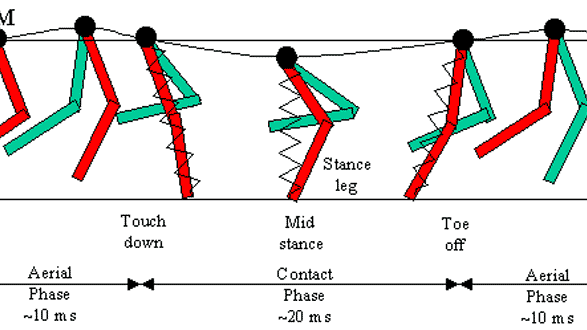
At his recent Speed Summit presentations in Lisle, Illinois, SMU’s Dr. Peter Weyand discussed the implications of the SMU lab group’s latest papers, “Foot speed, foot-strike and footwear: linking gait mechanics and running ground reaction forces” and “Are running speeds maximized with simple-spring stance mechanics?” In the second paper, Ken Clark, Laurence Ryan and, Weyand hypothesized that a passive, linear-spring model, long regarded as the means by which runners optimize force production and economy, would not apply to the mechanics that maximize the ground forces essential to high speed running.
Sports Performance - 9 Questions and Answers
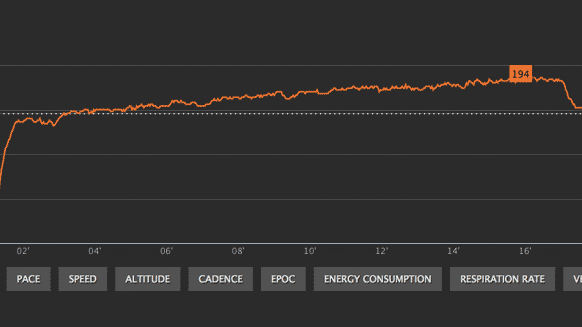
Valle responds to a wide range of sports performance questions including facial coding, athlete management systems, force plates, blood analysis, weight vests, sprint adaptations, active recovery, regeneration, wearable devices and smart fabrics, and shoes and cleats.
Overspeed - 4 Ways to Overclock Your Nervous System
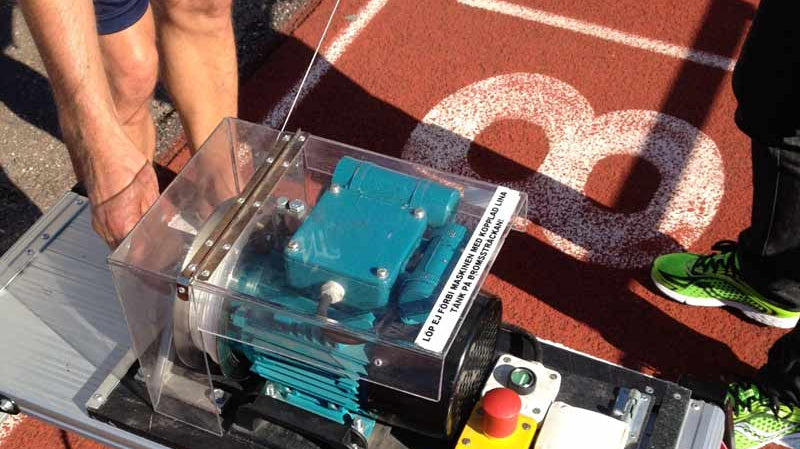
The pros and cons of four overspeed training options are considered including wind assistance, small-grade decline sprinting, towing devices, and potentiation modalities.
