

Articles

Own Your Mindset
As coaches, we need to do more than just teach technique, we need to create environments for success. If athletes feel they’re succeeding and accomplishing challenges, their positive mindsets will flourish. When athletes experience difficulties, such as injuries, we have methods we can use to help them maintain a positive mindset.

Coaching: Maximizing Impact with Communication
Effective communication from a coach can fast-track an athlete’s learning. Equally important, it builds emotional connections, develops mutual trust, and maintains effective coach-athlete relationships. The ability to communicate effectively through a spectrum of methods is imperative, and having the skill to do so in real time is vital.

Track & Football Consortium III
Oregon Coach Jimmy Radcliffe is the keynote speaker at the Track and Football Consortium III. Speakers include Chris Korfist, Tony Holler, Joel Smith, Dan Fichter, Lou Sponsel, Matt Gifford, Alec Holler, and Catherine Garceau.

Usain Bolt vs. NFL Running Back Chris Johnson in a 40yd Dash
In 2012, NFL star running back Chris Johnson challenged multi-World and Olympic Champion Sprinter Usain Bolt to race in a 40yd dash; that ultimately never happened. This article explores a theoretical matchup.
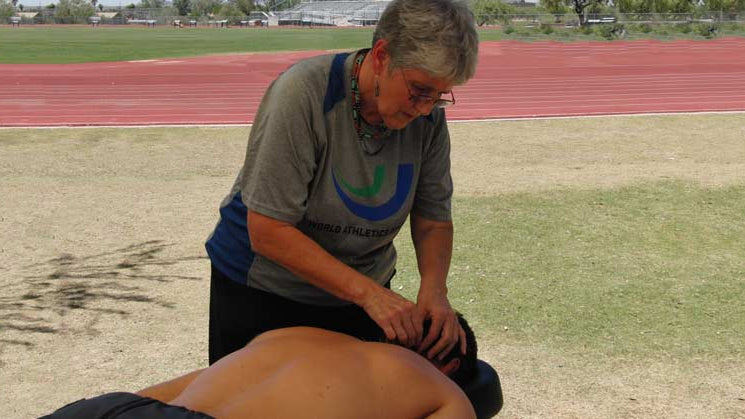
Sports Medicine: Acupuncture’s Role in Trackside Therapy
Many of the ALTS athletes and a few of the coaches call Sports Medicine Acupuncture “magic” because of how quickly it works and without medications, shots, or surgery. Often, results with them are seen in one treatment.

Beyond Bar Speed Part 2: VBT Considerations and a Case for Propulsion Metrics
You can think of data points as dots in an Impressionist painting. The more you provide, the better the overall picture. Adding propulsion numbers to VBT is one way of improving this painting.

How Coaching Science Can Set a 50m Freestyle World Record
Modeling a method of setting a new world record in the 50m freestyle can transfer over to other sports. The actual modeling involves terminology, chronology, constraints, and variables. With those in place, coaches can focus on the “3 E’s”: effectiveness, efficiency, and execution.

Learning From Everywhere
Reducing clutter, providing focus, and creating a clear structure for users is an important goal in every discipline.
Record, Rank & Publish: 8 Weeks of Alactic Training
Plainfield North Coach Tony Holler explains why he records, ranks, and publishes the times for his track workouts.

Lessons from Genius Sprint Coach Pierre-Jean Vazel
Crossing paths with sprint coach Pierre-Jean Vazel eight years ago resulted in a wealth of invaluable information that remains relevant today. It includes stride development, how to develop close relationships with athletes, and the necessity of careful record-keeping. P-J’s work with African 100m recordholder Olusoji Fasuba provides clear evidence of the success of his approach.

Learning to Coach: The Apprentice - Master Craftsman Model
Professions such as pilot and physician automatically command respect. Many people view coaches the same way. In many cases, though, coaches don’t have the same level of preparation and education as other professions. The best way of gaining this kind of experience is through mentorship programs such as ALTIS.

Testosterone, Testing, and Training: Freelap Dishes with Marco Cardinale
The progress and success of your athletes depend on a number of factors. Testing, testosterone levels, and sleep patterns are some of them. Noted sports physiologist Marco Cardinale provides information and insights you can incorporate into your program.
